 Loading…

 Reload document
  Open in new tab
 COM 656 9-2 Final Project
Abstract
This paper explores the current marketing strategies (or lack thereof) of a small, all-organic farm in North Carolina, discusses its unique selling proposition, and recommends specific public relations strategies to support the farm in its goals of increased financial independence and community engagement. The PR strategies consider the current audience as well as the target audience, and also discusses ROI measures and further strategy evolution.
Keywords: public relations strategy, organic, farm, USP, social media, digital tools, Instagram, Facebook, website, blog, white paper, podcast, ROI, Google Analytics, newsletter, branding, images, logo.
Public Relations Campaign for BEE SOW HAPPY Farm
Background
The company for which this milestone discusses digital tools is called To BEE SOW HAPPY Farm (https://camilleedwards.wixsite.com/tobeesowhappyfarm). It is a small, all-organic farm in Hayes, North Carolina, and operates as a small business selling culinary and medicinal herbs and vegetables; in addition, it is currently setting a CSA up. The proprietor, Camille Edwards, is very knowledgeable particularly about the medicinal properties of the herbs she grows, some of which are not commonly found outside mountainous regions. Ms. Edwards attended the 2018 Iredell Garden Fair in April (2018 Iredell Garden Fair, n.d.), and brought a selection of medicinal herbs to sell to the attendees, who, anecdotally speaking, made the journey from as far away as South Carolina.
Evaluation of Digital Tools
To BEE SOW HAPPY farm currently employs a small selection of digital tools in its marketing strategy. The farm has a Facebook page (https://www.facebook.com/pg/toBEESOWHAPPYFarm/about/?ref=page_internal), which includes basic information such as address, telephone number, a brief description of services and mission statement. The landing area of the Facebook page starts off with photos of the various plants and flowers grown, followed by recommendations and reviews, then a video, and finally, posts. The first post is a pinned post stating that the farm is open for business and containing a phone number, along with an admonition to call the farm to ensure that the proprietors are on site before visiting the premises. Ms. Edwards does post fairly regularly, including re-posting articles of local interest to her audience, such as local farmers’ markets.
Website
The Facebook page does provide a link to the company’s website: https://camilleedwards.wixsite.com/tobeesowhappyfarm. This is a customer-facing website, and appears to be largely static. It contains a lovely array of photographs of the staff and the products grown, the mission statement, contact information, farm hours, and the ability to pre-order vegetable plants. The site does list a CSA service along with a section on medicinal and culinary herbs, but both these are listed “pending,” with no dates referenced. There are a number of professional-quality images on the landing page, which ostensibly link to descriptions (or information pages, perhaps) of the various flora grown, but which have no links and which have placeholder text as a mouse-over alt. text, including two images that have placeholders even for the image title.
The company hasn’t a domain name of its own for its website: it is hosted using the Wix service, and displays a Wix advertising header on all pages. There is a contact form on the “Visit Us” page, along with a satellite map from Google Maps. The footer includes a copyright statement, Wix.com branding and a single social media icon linking to the Facebook page.
Challenges and Opportunities
As can be seen from the previous two sections, though the farm employs two very powerful and prolific digital tools, it is not yet to using either to its full capacity. As a result, both platforms are underwhelming. The Facebook site enjoys 183 followers, which is rather impressive and may be attributed to a significant amount of valuable information contained in the posts, should the viewer be willing to scroll through multiple pages of those posts to access them. The posts also contain a number of (now) past events that seem to have enjoyed good attendance, but only one of these past events show up on the Events section of the Facebook presence. This is likely a result of the way in which all these posts are instigated: the majority are posts from Ms. Edwards’s personal Facebook page shared to the company page.
The website is less well positioned than the Facebook page. As observed, it is very static, incomplete, and lacks a professional finish, thanks in part to its obvious reliance on Wix.com marketing. There are no means to enroll subscribers, nor any indication of any newsletters or other information pushed to interested parties.
There is significant room for improvement on both of these platforms. The website serves as an online store front, and needs to be updated. The first step should be to secure a domain name for the business: not only will this create a professional impression and therefore raise credibility, but it is also critical to communications: many ISPs block mass/targeted emailed communications from free email service providers by categorizing them as spam. The domain name will also, in many cases, eliminate the need for hosting company advertising on a business page, thus not detracting from the company itself (TechStylish, 2014).
The information on the website needs to be fleshed out and completed. Ms. Edwards is, as previously observed, very knowledgeable, and can use said knowledge to position herself as a thought leader in her industry (Scott, 2015), providing valuable thought leadership content in the fields of medicinal herbs, herbalism, organic farming practices, and local farming and growing certifications, evidence of all of which are contained in her various Facebook posts. She has already made a good beginning on both the Facebook page and the website by using herb, plant, and vegetable images of professional quality: the lush, very visually appealing photography is a “valuable form of thought leadership” (Chapter 12). Adding more thought leadership content on the website in the form of whitepapers and ebooks, the subjects of which can range from the medicinal uses of the various herbs Ms. Edwards grows and sells (properly attributed and cited, as there is a lot of information on this topic online) to the growing of such plants in the state of North Carolina, which is notorious for its poor soil quality—a result of poor tobacco and cotton farming practices in the early 1900s that resulted in severe deforestation and erosion of topsoil and much-needed nutrients (Bishop, 2010).
The latter particularly would be of tremendous interest to the farm’s target audience, which is likely made up of local families interested in a holistic approach to food and general wellbeing (who use herbal remedies before resorting to commercial pharmaceutical preparations), families who rely on organically grown vegetables for consumption, small-scale or home growers of herbs and/or vegetables, and amateur and professional herbalists in the local community. Anecdotally speaking as a home grower of herbs and vegetables, and as an amateur herbalist in contact with community members engaged in the same practices, the topic of growing in such poor-quality soil is lively with discussion wherever members of this audience gather. Providing thought leadership content (Scott, 2015) on these topics on the website, which can then be pushed to the audience in the form of newsletters and also reposted on the company’s Facebook page, will create an online company made up of local audience members and should elevate the aforementioned lively in-person discussion to a more robust engagement on the Facebook platform.
This knowledge can then be converted into white papers (downloadable upon registration), which can then be combined into e-books (accessible without registration) per David Scott’s recommendations (2015): both products would lead to customer information that can be used to market to and to increase Facebook engagement. Edwards would then want to further position her thought leadership by leading discussions pertaining to these on her Facebook page with the Facebook community, and can elevate this strategy further by taking advantage of Facebook’s static and live video features, as video is also a valuable form of thought leadership (Chapter 12). The ultimate result of this strategy should be to drive sales of the farm products, and also to position the farm itself as a leading producer of quality, hardy medicinal herbs and vegetables in the entire state, which reputation the farm does not currently enjoy.
Case Study of New Media Tools: The Bradford Store
The Bradford Store (https://www.facebook.com/The-Bradford-Store-141739866152/) grows and sells organic produce, culinary and medicinal herbs and plants, and landscaping supplies in Huntersville, North Carolina. In addition, it also acts as a distribution outlet for other local farmers and producers, selling sustainably raised meat, free range eggs, and other local and organic food and skincare products; the Bradford Store also supplies harder-to-find items such as duck eggs and goat’s milk, also locally produced. The Bradford Store regularly hosts classes and events on topics ranging from yoga (classes are held outdoors on the premises) and health seminars to organic gardening lectures and foraging and wildcrafting walks, again on the premises. Judging from attendance at a handful of recent events, and from the reviews and posts on their Facebook page, the store seems to enjoy a small but energetic and steady following in the local community. A discussion of the new media tools employed by the Bradford Store follows.
Facebook. The Bradford Store’s main presence and most prolific activity is on Facebook. So much so, that the store appears to have abandoned any attempts to maintain a webpage of its own—though there is still a link to what had presumably been their website on Yelp (https://www.yelp.com/biz/the-bradford-store-huntersville) and on sundry online resources, the URL is inactive.
The Bradford Store does use Facebook extensively, and posts every few days. The posts often pertain to the education events to which the store plays host, along with high quality photographs of products and produce newly come into season or into the store. Posts abound also of current sales (suitably complimented by high quality photographs) and a random assortment of clientele in situ. Contact information in the form of a telephone number is prominently displayed, as are hours, location, and reviews.
Instagram. There is a link from the Facebook page—which appears to be the store’s main presence and takes the place of a traditional website—to the store’s page on Instagram (https://www.instagram.com/explore/locations/1854897/the-bradford-store/), though it would take a casual browser an additional click to find it on the “About” page. A perusal of this platform reveals selections of both amateur (rather, casual and candid) photography as well as higher quality, more professional imagery. All photos seem to have been taken on the premises, and include representations of staff (including the four-legged and winged varieties), clientele of all ages, store offerings, and examples of the premises’ use in professional photography shoots and portfolios. Subjectively, it is a varied, lush presentation of the store’s activities, and again subjective, very much a pleasure to scroll through.
Weekly Email Newsletter: The Bradford Store sends a weekly newsletter via email to those who have visited the store in person and have signed up in writing on the store’s guestbook. A list of new products arrived in the store that week, miscellaneous farm happenings (for example, the arrival of new chicks), upcoming events, and sales, appear in a simple bulleted list. A call to action is included in the form of a summons to Instagram, and the store’s hours are included in the same bulleted list. Below this section appears a robust columnar listing and photos of current inventory, followed by a repetition of social media platform information and hours, terminating with address information.
Challenges. The Bradford Store is not exactly the easiest organization to locate, unless it is being looked for by someone who already knows the name of the store and what it carries. A Google search of “organic produce in Huntersville NC” produces a list of results of which Bradford appears fourth, not including sponsored ads, which pushes it further down the visible list. Adding the search term “local” pushes the store completely off the first page of results; it appears only as an outdated Pinterest result on the second page, an untitled and uncaptioned photograph of an indistinct farm house that links to an inactive “not found” placeholder. Bradford does not appear again as deep into the search results as the fifth page. As less than 10% of search users look beyond the first page of results (Sharp, 2014), this is a very grave challenge for the Bradford Store. Significant SEO work needs to be undertaken to resolve this issue, though the first step should probably be to establish and populate a Google+ presence to boost Google search results (Scott, 2015).
The various new media tools Bradford uses are not well aligned in their current form. The importance of branding in the age of new media cannot be overstated: visual identity and brand recognition rely on consistency along a range of branding tools such as color themes, logos, messaging, and tone (Kaputa, 2012), and Bradford lacks this cohesion. The profile photos on Facebook and Instagram do not match, neither does the color scheme across all three platforms, nor do the images being used as logos. The images being used (presumably) for branding purposes are amateurish, and the audience needs to delve further into the information presented to ensure that the page being looked at actually belongs to the Bradford Store in Huntersville.
There is no way to link back from the truly visually appealing Instagram page to the Facebook page; once a user arrives on the Instagram page, he is stranded, as it were. The Instagram page also has no identifying or contact information except for the name itself, and lacking appropriate branding measures, further leaves a casual user in some doubt of the identity of the organization.
The newsletter is very informative, but appears amateurish and somewhat rushed: the banner images not properly aligned; the typeface used is basic and unimaginative, and the long list of bullets renders the information presented therein less visible and does not hold the audience’s interest: as Ahad and Fauzi (2014) point out, people don’t read information so much as they scan information, and there is very little effort made in the layout to accommodate common reading patterns.
There is a dearth of interactive communication between the store and its audience. For example, the Facebook page shows a number of comments made by current customers, as well as positive reviews posted. There are few, if any, responses from Bradford. Customers questions (regarding a published event or in response to a product announcement or sale) go unanswered, and there is no option to direct-message the Bradford Store. Customers expect and rely on “instant, 24/7 communications” (Scott, 2015, Chapter 2), and this crucial aspect of a PR campaign is missing, likely resulting in lost sales due to a lack of response—anecdotally speaking, if a busy parent of two children is interested in an item and does not get an answer quickly while in the midst of running errands, he or she may find it easier and therefore be more likely to pop into the local Whole Foods to retrieve the item.
Opportunities. Despite the gaping holes in the Bradford Store’s marketing campaign, there is a solid strategy that it does get right.
The Bradford Store positions itself as a thought leader (Scott, 2015) in holistic health and alternative medicine: a very viable brand persona for an organization in this industry is the modern parent who may take advantage of commercial pharmaceuticals but is economically comfortable and mindful of the health concerns arising from the commercial use of pesticides, preservatives and other harmful chemicals used throughout the current food pyramid. In order to target this specific audience, Bradford hosts a series of seminars and events, run by local subject matter experts with relevant credentials (including board-certified medical doctors and scientists). Anecdotally speaking (the author has attended a handful of such events, but not every one), there is no sales push toward Bradford products, and so direct marketing tactics are not used. It was observed at a recent seminar on foraging for culinary and medicinal weeds (on Bradford premises) that a number of attendees chose to purchase from a small, tastefully displayed selection of local plants and the aforementioned weeds (potted) from a table tucked away at the back of the customer area.
While the newsletter does have its failings, there is no contesting that it does provide valuable, timely information to those who have signed up (there is no option to sign up on the Facebook page; one has to visit the store in person to do so, or perhaps phone the store). The brand persona described above may well be motivated enough to peruse every single line of the newsletter despite the draws on parental “free” time.
Case Study Conclusion. It is possible that the proprietor of the Bradford Store considers himself—and the organization—currently at full capacity, and does not desire further market growth. Certainly, the store itself appears to have a steady, if slim, stream of business, judging from the Facebook page and the author’s sporadic visits. If this is the case, then the current PR campaign has succeeded admirably; however, judging from the continuing array of events and the prolificity of newsletters and Facebook posts, this is not a likely representation. That being the case, there is ample opportunity for a more robust PR communications campaign by building on existing elements.
Target Audience
There are myriad websites and blogs online that cater to the herbal preparations niche. The quality of these resources varies; some are extremely detailed both in terms of ingredients, methodology, and resources; most are anecdotal representations of “recipes” a mother of young children has cobbled together; quality visual media is generously employed; citations and expert resources, not so much. As Camille Edwards currently serves as the executive director of the N.C. Herb Association (http://www.ncherbassociation.org/) (Edwards, n.d.), it is reasonable to assume that Edwards will be able to leverage her 15 years’ herbalist experience to deliver expert, factual, and appropriated cited content—this is a crucial element for her in the age of anti-vaccination sentiment, skepticism toward “Big Pharma” and growing awareness of the effects of chemicals in our environment and consumables. As Edwards already runs a farm that caters to the local community, and her products are not crafted for mass markets and do not lend themselves well to shipping, her target market is to be sought in her local area. Specific components of her target market include the following:
- Anecdotally speaking, many individuals’ herbalism and/or holistic journeys begin upon becoming parents. The author began learning about medicinal plants in this manner, upon learning that most over-the-counter pharmaceutical products, such as cold medicine, are not labeled for dispensation to children below the age of six, though even that age recommendation is attached to some controversy (CNN, n.d.). Commonly available alternatives include commercially sold homeopathic and naturopathic preparations, which are not subject to the same rigor of FDA testing as other commercial pharmaceuticals (Stein, 2015). In the absence of FDA data, it is conceivable that cautious, educated, concerned parents turn to subject matter experts and quality scientific pharmacognosy studies to evaluate the use of herbal and other alternative preparations. Camille Edwards fits the definition of a subject matter expert in this field quite neatly.
- Health concerns over the use of pesticides has fueled an increasing preference for organically produced products, along with a marked preference for locally grown produce: 73% of Americans claim to buy locally grown produce (Funk, Kennedy & Hefferon, 2016). The local representation is another target market niche.
- The third target market comprises local businesses with an interest in local and organic growing and produce: local growers and farms, landscapers, nurseries, and garden centers.
Current Social Trends
As observed, TBSHF’s audience is made up largely of millennials who are parents, those who are trending away from commercialism and potentially harmful chemicals and pharmaceuticals and toward a more holistic, naturopathic, and organic approach, or a combination thereof. These are the same demographics that are heavily involved in social media, and there is ample evidence that these same demographics are those who are well educated (Pew Research Center, 2017) and therefore are likely to demand scientific evidence-based information over anecdotal information. In an era of “fake news” and the general distrust of large corporations, autocratic government institutions, and the ribald sharing of unvalidated information across social media platforms, it is reasonable to assume that TBSHF’s target audience is seeking reliable, expert information from accessible authorities like Camille Edwards, especially if they can engage in real time with her or her staff and receive thoughtful, resource- and reference-backed information and feedback (Scott, 2015). The latter specifically, the real-time, 24/7 (or a time frame approaching it) access and interaction, is a rapidly growing social trend that TBSHF’s audience demands to engage in and that TBSHF can leverage to increase audience participation and engagement, and reinforce TBSHF’s position as an accessible authority in the field.
Recommendation of Digital Tools
Photographs are a compelling content marketing tool (Scott, 2015), and Edwards’s products—local produce and herbs—offer significant fodder for lush, high quality photography that can be hosted on Instagram. The platform offers social media integration (Chapter 15), and original photography thereon would not only draw an audience, but would also drive social media activity, even if such activity consists of a couple of words. Further social media integration can be achieved by using Pinterest buttons to enable curation of the images into specific themes or gardening layouts.
As natural subjects render artistic photography, TBSHF may be tempted to use 500px instead of Instagram to display their photography; 500px is, however, targeted toward professional photographers and photography students, and artists, and the features of the platform would be overkill for TBSHF’s purposes (TBSHF’s audience would likely not wonder what the aperture and shutter speed was, nor yet which filter was used, for a a specific photograph (O’Kane, 2015)).
Instagram, in comparison, focuses on community (Lux, 2011), and its users are skewed toward women and millenials particularly (Pew Research Center, 2017), which neatly encapsulates the majority of TBSHF’s target audience, and therefore is a better fit for TBSHF’s marketing goals.
Static website with a companion blog (Scott, 2015)
There is already a website in place, but it has not been updated in a while. It is also currently hosted on Wix.com, and so will require its own domain name purchased (the hosting may remain on Wix.com, at least for the time being to control costs). It will need to be refreshed, and fleshed out with the photography taken for Instagram or 500px, with cross-linking. The various informational pages will also have to be fleshed out, as many are currently place holders. While a companion blog is generally reserved as an accompaniment to audio and video content, in this case it will serve up Edwards’s thought leadership: this is where she should publish her various white papers and e-books, and again allow linking and sharing on Facebook and Instagram.
White papers and e-books
White papers are considered “stiff and structured” (Scott, 2015, Chapter 18), so Edwards may be better served to use more accessible and casual terminology, such as “plant personalities” to inject some humor into her content and thus attract more readership. White papers can also take the form of infographics, which would be great for curating such information relevant to the local target audiences as which medicinal/culinary plants work best in which local soil types. Once a sufficient number of white papers has been generated, TBSHF could then compile them into an e-book, accessible from the website.
Podcasts
The large proportion of To BEE SOW HAPPY FARM’s (TBSHF) target market comprises of adults working full-time, whether in or outside the home. As we know that the average commute in North America is 29.5 minutes, this provides a (willing) captive audience for podcasts that are just under that length. Podcast listening has increased steadily over the last decade (Pew Research Center, 2017), and TBSHF can leverage this social activity by podcasting tagged interviews with other local subject matter experts (a resource list will be provided for the final project) as well as with members of the target audience itself, such as a neighbor who relies on Edwards’s knowledge to compound herbal remedies for her young child, or a town resident who buys the bulk of his produce from TBSHF because the farm uses organic farming practices exclusively (Edwards, n.d.).
To BEE SOW HAPPY Farm (TBSHF) already employs a Facebook presence, albeit a limited one. The TBSHF Facebook page will need to be fleshed out with the photography taken for Instagram or 500px, and also will link to the various aforementioned resources. Since the majority of the target audience (extrapolating from age range and demographics) are likely to be heavy Facebook users (Jiang, 2018), Facebook will provide a vibrant, interactive and active community with which to tie together all the disparate collateral.
Branding Imaging Strategies
The sum total of TBSHF’s branding is the image of a pink cartoon pig along with the name of the farm, sometimes accompanied by a cartoon bee. There is no common color theme nor other elements. Given the subject matter, the color green should figure prominently in the branding: the color green is already being used in some of the website copy, and the color itself denotes health and serenity (SNHU COCE Assistive Technology, 2015). Complementary colors brown and yellow should be used, denoting earthiness, natural and durable qualities, and light and warmth, respectively. A strong branding strategy would be to use these three colors in the logo as well as in background images and text, not only on the website, but throughout the aforementioned digital tools. The logo particularly needs to be updated and disbursed throughout all platforms, and should also adhere to this color scheme.
The following is an idea board to capture the look of what the logo can be:
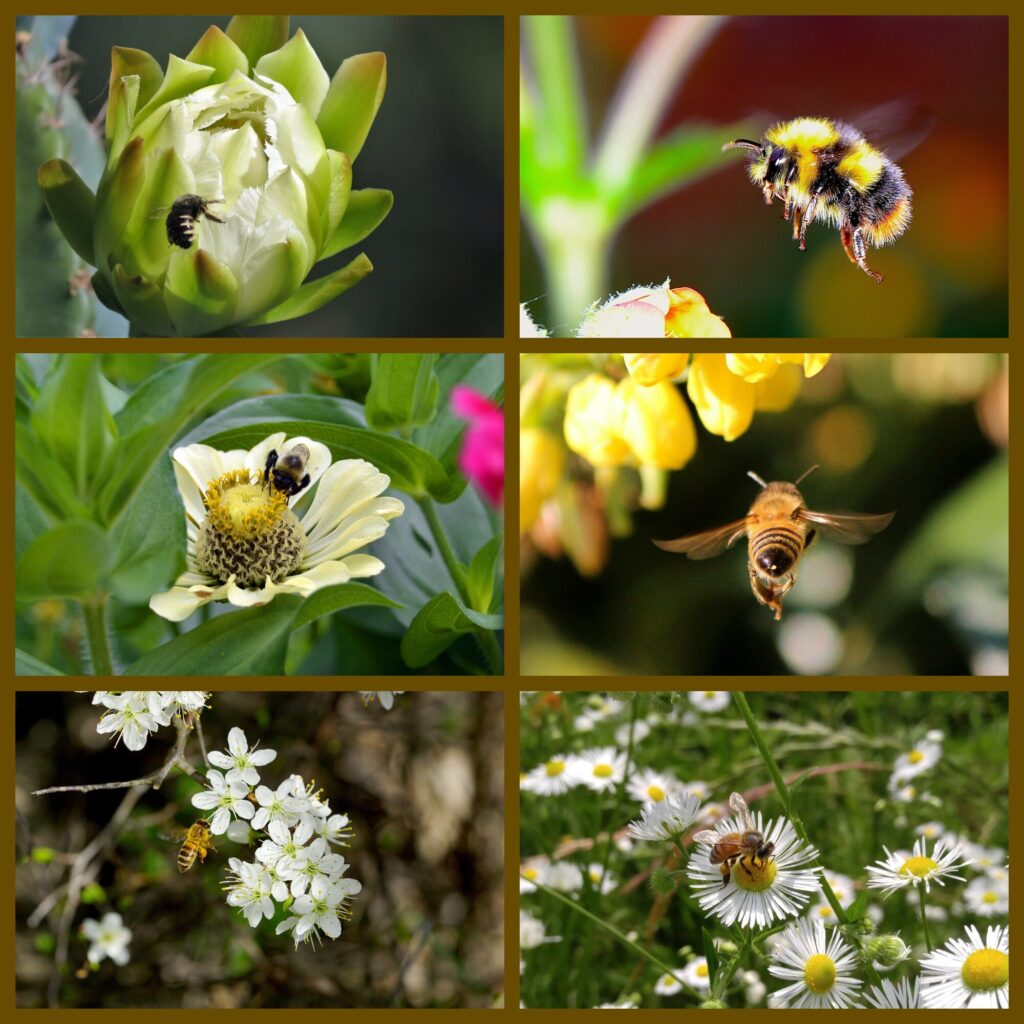
Image credits: Pixabay users (clockwise from top left) GeorgeB2, woodypino, quinntheislander, JamesDeMers, Schwoaze, sunmark2 under the CC0 Creative Commons license.
Rather than using cartoon images, which may undermine TBSHF’s authority and credibility, and since quality photography and imagery are a compelling content marketing tool (Scott, 2015), high quality photography (of the kind the organization already shows an appreciation for, evidenced by its use on stock photography on this page: https://camilleedwards.wixsite.com/tobeesowhappyfarm?lightbox=component_items_3_16803) should be proliferated throughout the website, including in the logo. The idea board shows how the bee, an existing branding element (which should be preserved for the sake of familiarity for existing clientele), can be enhanced, and can work together with imagery of plant life, blending the recommended color theme therein. The image of a bumblebee is preferable to that of a honeybee as the fluffy, fuzzy body of a bumblebee is much less threatening than the leaner, meaner body of a honeybee; anecdotally speaking, the latter is also often mistaken for a wasp or other unfriendly stinging insect, and may evoke a negative response in a viewer.
Predict Future Trends
As TBSHF compiles the collateral under discussion, other digital tools such as short videos showcasing relevant media such as short, candid video interviews with buyers visiting the farm, or recorded Skype or Google Hangout interviews or footage of local events such as local farmers’ markets, will be a valuable addition to TBSHF’s digital toolkit, and will ensure that the content disbursed remains fresh, dynamic and relevant.
To a business hitherto focused on static materials and relying mainly on face-to-face interaction with clientele to “sell” expertise as well as product, the use of videos may seem frivolous or amateurish, which is not altogether an invalid perspective, given the wide range in quality and professionalism in the myriad videos available online. There are additional considerations, however: to begin with, TBSHF’s brand identity comprises a small, intimate, local setting. While professionalism is required to craft an aura of authority and credibility to reinforce Edwards’s expertise in this field, spontaneous videos filmed using a smartphone, for example (as opposed to using professional videography equipment) will lend an air of authenticity and intimacy to the message, which is exactly what TBSHF strives for. Furthermore, the audience reach of video platforms such as YouTube cannot be denied; TBSHF will want to consider, for example, that more than four billion videos are viewed every day on YouTube (Bullas, n.d.), and the site attracts 800 million unique users each month. With integration with other social media platforms increasing, the assumption can be made that the current upward trend (as demonstrated by these statistics) of amateur videography has no reason to reverse course.
Sample Copy and Engagement Assets
This section provides samples of the various digital tools recommended for To BEE SOW HAPPY Farm’s (TBSHF) PR campaign. Please note that these are samples only, as TBSHF will have to generate the specific content and imagery.
White Paper Sample
This is a sample of a white paper that showcasing Edwards’s thought leadership and original content. The elements contained therein are deliberate: the background would be original photography done on the organization premises, including the branding colors (green and brown), though as a background the image would probably need to be more transparent than pictured here to provide greater figure–ground contrast and enhance readability (Kostelnick & Roberts, 2011). Similarly, the stock photograph of the herb used would be replaced by original photography of the yarrow Edwards wildcrafts and propagates for sale.
The “How to grow it” section would showcase Edwards’s vast knowledge of growing herbs in the challenging North Carolina soil, and would contain her time-tested tips regarding growing conditions and additives; the “How it helps your family” section—labeled in this fashion to very deliberately, in Simon Sinek’s words, address the “why” (Burgess, 2013)—is another avenue that will allow Edwards to shine: anecdotally speaking, the vast majority of websites in this particular niche dispense unproven, uncited herbal remedies with little hard science to back them up. Edwards can use properly cited information with a reference list included with every such example, reinforcing her authority and credibility.
While white papers are generally formal and written in the third person to establish professionalism and credibility (Hoffman, n.d.), TBSHF’s audience does not comprise exlusively a professional business community, but rather the less formal, more casual parenting and nature loving communities, both of which may appreciate a more casual tone, as long as the information contained therein is factual and backed up with the appropriate resources and references. TBSHF’s brand identity is small, local, and intimate, and the use of the first and second person voices in white papers is, therefore, appropriate given the context and the branding.
There are arguments to be made for and against the gating of these white papers. Scott (2015) argues that a gated approach, i.e., the requirement for user input (email address or other personal information) before access to the materials throws up a barrier that deflects audience engagement. It is also conceivable that the more casual nature of TBSHF’s audience may shy away from such a formal engagement with TBSHF as the releasing of email addresses, regardless of how stringent the anti-spam assurances. At the same time, it cannot be denied that gated collateral is an established method of crafting a distribution and client list (Hoffman, n.d.). TBSHF may, therefore, want to combine both strategies: for example, TBSHF may allow the download of one or two white papers before requiring user information for subsequent downloads.
A less aggressive strategy would be to allow the download of white papers without any kind of gating, but including a subscription call to action on each white paper and everywhere the white papers appear; if the user enjoys the content, he or she may sign up to gain advanced notice—or advanced access—to future white papers.
These blended strategies have the added benefits of allowing users to evaluate the quality of the white papers before investing personal information in more of the same, and also to help generate ROI metrics.
Facebook Post Sample
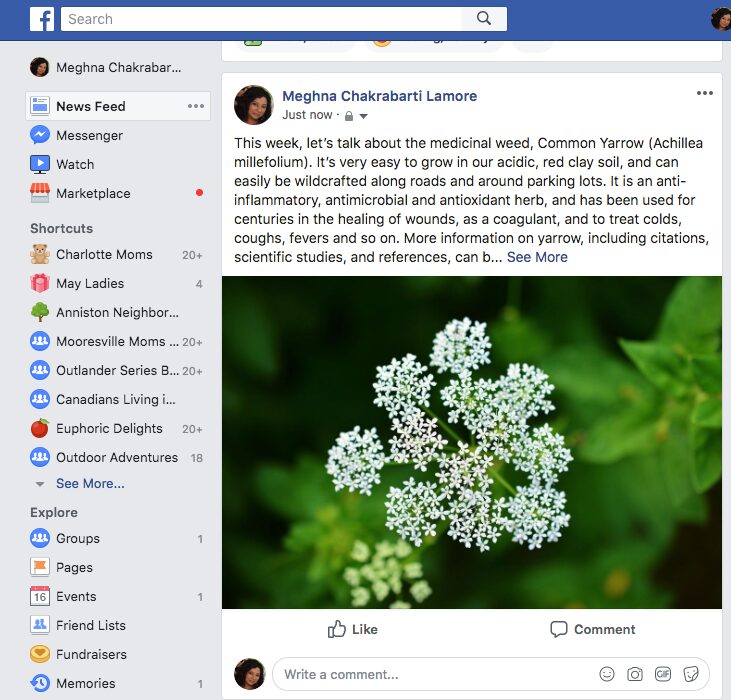
Full text: “This week, let’s talk about the medicinal weed, Common Yarrow (Achillea millefolium). It’s very easy to grow in our acidic, red clay soil, and can easily be wildcrafted along roads and around parking lots. It is an anti-inflammatory, antimicrobial and antioxidant herb, and has been used for centuries in the healing of wounds, as a coagulant, and to treat colds, coughs, fevers and so on. More information on yarrow, including citations, scientific studies, and references, can be found on our website here [white paper placeholder], and tutorials on how to prepare yarrow can be found here [website tutorial placeholder], and we’ve also released a podcast episode on yarrow as well; in the meantime, reply below to discuss how to recognize it, how to grow and/or harvest it, and what we all use yarrow for. If there’s enough interest, we can even include yarrow in our wildcrafting class coming up next month! (Image credits: Pixabay user “congerdesign” under the CC0 Creative Commons license.)”
As TBSHF will use its existing Facebook page to link together all the other disparate tools and resources, this sample is typical of the type of post that TBSHF will want to use. Using opening phrases like “this week” will announce to the audience that they can expect fresh, original and prolific content from TBSHF, which will keep their interest engaged. The stock image should be replaced by TBSHF’s own original and high-quality photography, preferably with Edwards herself or another member of her staff as part of the image composition to remind the audience that they are engaging with real people in their own community.
Instagram Sample
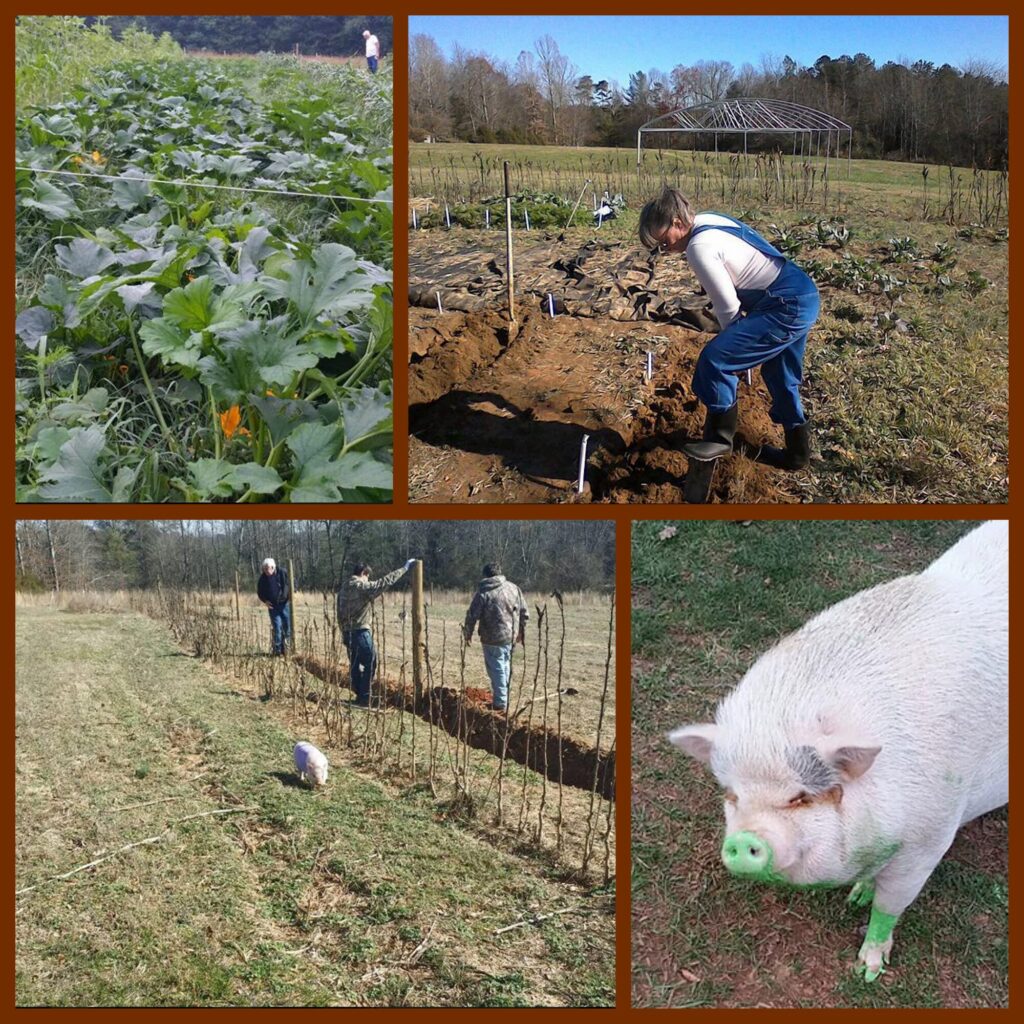
This is an example of the sort of imagery that TBSHF should post on their Instagram page. The photographs themselves (taken from https://camilleedwards.wixsite.com/tobeesowhappyfarm/gallery) will need to be of significantly higher quality, and will need to be composed to better capture the staff and other faces familiar to the current audience (the photograph of the pig having stepped into a can of green paint is very representative of the imagery that lends authenticity and a sense of humor to the whole organization). The photographs of the herbs and plants that TBSHF cultivates will need to be in higher resolution, better quality and in more vivid color, even if said color is achieved by using both better lighting and the minimal use of photo editing tools.
TBSHF will no doubt want to leverage imagery from visitors and other audience members: language should be included across all marketing collateral, directing visitors to the farm and clients at local events to upload their own photos of TBSHF activities and products using predefined hashtags (adding a disclosure for TBSHF’s marketing use of such uoloads); TBSHF can then use the hashtags to collate a larger range of images to use on Instagram and Facebook. Certain guidelines will have to be followed in the curation of imagery: by previewing the images in grid format, TBSHF can put together a visually attractive feed, keeping in mind such issues as visual clutter and even distribution of photograph types (Loren, 2016). This strategy will further reinforce the feelings of community and intimacy that comprise TBSHF’s branding.
Podcast Sample
This is a sample of the type of podcast TBSHF will want to publish on a regular basis. As observed in a previous milestone, a large part of TBSHF’s target audience comprises the commuting adult, and the podcast is tailored to appeal to that specific niche. This specific sample speaks to common commuting conditions, and includes a medical disclaimer as well as calls to action to view the transcript (which includes proper citations to underscore TBSHF’s authority and credibility) on the website and ask questions on the Facebook page, and also to upload photographs (of plants arousing the listener’s curiosity) to TBSHF’s Instagram page for identification and further discussion. These calls to action will drive cross-platform traffic.
Return on Investment (ROI) Report
AsTBSHF’s PR campaign does not include the sale of products, ROI from the digital tools employed will be measuring the number of Facebook and Instagram likes and follows, organic traffic to the various platforms, cross-traffic from one platform to the others, downloads of white pages and podcast subscriptions.
Apart from recording the numbers of likes and follows (which should be recorded on a weekly basis),Facebook impact will be measured using Google Analytics (Gotter, 2015). Google Analytics will track the number of visitors to a forwarding page by using Urchin Traffic Monitor (UTM) tags (Lenardson, n.d.): when a user clicks in a post that will take them to material on the website, an intermediate “thank you” page (which then forwards to the website) will be tracked on Google Analytics (Hines, n.d.).
This measurement can be set up for any page of which TBSHF wishes to track the performance, for example specific white papers or the entire white paper section on the website, or perhaps the filling out of the “contact us” page (Hines, n.d.). It will also be helpful in tracking activity to and from the various Facebook posts and photos themselves, and associated hashtags, and will help TBSHF identify what sorts of material are generating the most interest and traffic.
Google Analytics’ segment differentiation will also be helpful in identifying particular demographics to which certain types of posts appeal (Hines, n.d.): for example, determining what region of the U.S. visitors are engaging from will help determine if TBSHF’s aim of reaching the local community is moving forward, or if adjustments to the PR strategy are necessary.
One last Google Analytics feature is noteworthy: the ability to compare engagement levels across various platforms (Hines, n.d.). This will allow TBSHF to understand which platforms are generating the most interest and traffic, and cultivate those accordingly; alternatively beefing up engagement on those platforms that are lagging behind.
Instagram impact will also be measured, in part, using UTM tags on Google Analytics. TBSHF will also want to track comments (both positive and negative) and followers on a weekly basis, and also ensure that the demographics that Google Analytics identify match the local community goal. Podcast and white paper impact will largely be gauged from the number of downloads and subscribers (also to be tracked on a weekly basis).
Conclusion
TBSHF’s potential for growth and digital social media engagement is immense, and there is much room to employ a number of or all of the digital marketing tactics discussed in this paper with the aid of social media. Assuming that branding is considered carefully and implemented effectively, TBSHF has strong reason to lean on social media digital tools to capture its target audience, and do so with a minimal financial investment, though with a significant commitment in terms of time and effort. Once a number of these strategies are put into place, it is very conceivable that TBSHF’s own audience will organically grow TBSHF’s story themselves, not only sharing TBSHF’s content and narrating their own interactions with TBSHF and thus increasing TBSHF’s visibility among its target audience, but also in the development of a robust, educated community, which will further raise TBSHF’s visibility as an authority, and also create the type of intimacy and community involvement that appears to be a touchstone of a business that is, at its roots, a local farm.
References
2018 Iredell Garden Fair. (n.d.). Retrieved from Iredell Garden Fair: https://iredellgardenfair.weebly.com/
Ahad, D. & Fauzi, Z. (2014, July 12). People Don’t Read, They Scan. Retrieved from Stampede:
People Don’t Read, They Scan
Bishop, R. (2010). Agriculture in North Carolina during the Great Depression. Retrieved from NCPedia: https://www.ncpedia.org/agriculture/great-depression
Bullas, J. (n.d.). 35 Mind Numbing YouTube Facts, Figures and Statistics – Infographic. Retrieved from jeffbullas.com: https://www.jeffbullas.com/35-mind-numbing-youtube-facts-figures-and-statistics-infographic/
Burgess, C. (2013, September 1). Why People Love Social Brands. Retrieved from B2C: https://www.business2community.com/branding/people-love-social-brands-0596003
CNN. (n.d.). FDA panel: No cold medicines to children under 6. Retrieved from CNN Health: http://www.cnn.com/2007/HEALTH/10/19/coldmed.fda/index.html
Edwards, C. (n.d.). Medicinal and Culinary Herbs. Retrieved from To BEE SOW HAPPY Farm: https://camilleedwards.wixsite.com/tobeesowhappyfarm/services
Ellen, J. (2003). White Yarrow: Achillea Millefolium. Retrieved from Flower Essense Society: http://www.flowersociety.org/yarrow_plant_study.htm
Funk, C., Kennedy F. & Hefferon, M. (2016, December 1). Americans’ views about and consumption of organic foods. Retrieved from Pew Research Center: http://www.pewinternet.org/2016/12/01/americans-views-about-and-consumption-of-organic-foods/
Gotter, A. (2015, February 23). How to Measure Social ROI on Facebook Ads. Retrieved from Social Media Examiner: https://www.socialmediaexaminer.com/measure-social-roi-on-facebook-ads/
Hines, K. (n.d.). How to Use Facebook and Google Analytics TOGETHER to Monitor Fan Traffic. Retrieved from Post Planner: https://www.postplanner.com/how-to-use-facebook-and-google-analytics-together-to-monitor-fan-traffic/
Candan, F., Unlu, M., Tepe, B., Daferera, D., Polissiou, M., Sökmen, A., & Akpulat, H. A. (2003). Antioxidant and antimicrobial activity of the essential oil and methanol extracts of Achillea millefolium subsp. millefolium Afan. (Asteraceae). Journal Of Ethnopharmacology, 87(2/3), 215. doi:10.1016/S0378-8741(03)00149-1
Hoffman, S. (n.d.). 10 Best Practices for Writing a White Paper that Gets Results. Retrieved from Hoffman Marketing Communications: http://www.hoffmanmarcom.com/pdf-doc/10-best-practices-for-writing-a-white-paper-that-gets-results.pdf
Jiang, J. (2018, May 2). Millennials stand out for their technology use, but older generations also embrace digital life. Retrieved from Pew Research Center: http://www.pewresearch.org/fact-tank/2018/05/02/millennials-stand-out-for-their-technology-use-but-older-generations-also-embrace-digital-life/
Joybilee Farm. (2015). How to stop bleeding with yarrow. Retrieved from Joybilee Farm: https://joybileefarm.com/how-to-stop-bleeding-yarrow/
Kaputa, C. (2012). You are a brand! In persona and online, how smart people brand themselves for business success (2nd ed.). Nicholas Brealey Publishing: Boston, MA.
Kostelnick, C. & Roberts, D. R. (2011). Designing Visual Language: Strategies for Professional Communicators. Pearson Education, Inc.
Lenardson, C. (n.d.). How to Use UTM Tracking to Analyze Your Digital Marketing. Retrieved from Ignite Visibility: https://ignitevisibility.com/use-utm-tracking/
Loren, T. (2016, February 26). 5 Amazing Instagram Feed Ideas with Bonus Tips. Retrieved from Later: https://later.com/blog/how-to-curate-instagram-feed/
Lux, K. (2011, December 15). What is Instagram and Why Is It So Popular? Retrieved from Infospace: https://ischool.syr.edu/infospace/2011/12/15/what-is-instagram-and-why-is-it-so-popular/
O’Kane, S. (2015, August 6). The new 500px app is a high-resolution Instagram. Retrieved from The Verge: https://www.theverge.com/2015/8/6/9104337/500px-photo-app-iphone-redesign-instagram
Pew Research Center. (2017, January 11). Who uses Facebook, Instagram, LinkedIn and Twitter. Retrieved from Pew Research Center: http://www.pewinternet.org/chart/who-uses-facebook-instagram-linkedin-and-twitter/
Pew Research Center. (2017, June 16). Audio and Podcasting Fact Sheet. Retrieved from Pew Research Center, Journalism & Media: http://www.journalism.org/fact-sheet/audio-and-podcasting/
Scott, D. M. (2015). The New Rules of Marketing & PR (Vol. 5th Edition). Hoboken, New Jersey, U.S.A.: John Wiley & Sons.
Sharp, E. (2014, April 30). The First Page of Google, by the Numbers. Retrieved from ProtoFuse: https://www.protofuse.com/blog/details/first-page-of-google-by-the-numbers/
SNHU COCE Assistive Technology. (2015, October 29). COM-610: What Do Colors Mean in Logo Design? Retrieved from YouTube: https://www.youtube.com/watch?v=1t5QmqlJkxo
Tadić, V., Arsić, I., Zvezdanović, J., Zugić, A., Cvetković, D., & Pavkov, S. (2017). The estimation of the traditionally used yarrow (Achillea millefolium L. Asteraceae) oil extracts with anti-inflamatory potential in topical application. Journal Of Ethnopharmacology, 199138-148. doi:10.1016/j.jep.2017.02.002
TechStylish. (2014, June 19). Why You Need Your Own Domain Email. Retrieved from TechStylish: http://www.techstylish.com/2014/06/why-you-need-your-own-domain-email/
USDA NRCS National Plant Data Center. (2003, November 13). Common Yarrow. Retrieved from USDA NRCS: https://plants.usda.gov/factsheet/pdf/fs_acmi2.pdf